Saturday, 21 July 2012

Sketches from the Yerevan National Gallery

When I visited the Yerevan National Gallery in 2011 I took the opportunity to sketch what I saw, as photography is not allowed.

In the Roman era section were fragments of plaques, I sketched the fragments and on return to London was able to reconstruct (in red) what it would have stated, this dated to 116 AD, commemorating the conquest of Armenia by the emperor Trajan. Found in Artashata, probably part of a victory monument.
One of five terracotta idols, dated to around 200 AD, of the goddess Anahit. It seems that by the 3rd century AD she was no longer being depicted in the classical style, but had taken on, for lack of a better description, the look of the Madonna. Curiously, this was BEFORE Armenia became a Christian kingdom.
Sketch of around eight terracotta idols of the god Mher (Mithra).


Thursday, 15 March 2012

The Cimmerian Shot

The Parthian Cimmerian Shot

Whilst I was researching about king Sargon II of Assyria (reigned 722 - 705 BC) and his campaign against the Cimmerian horde in Asia Minor I came across this image, from his palace of Dur-Sharrukin, of Cimmerian horse archers firing back at the pursuing Assyrian cavalry.
What is the big deal about this image? Well, it is established wisdom that this horse-archery technique originated with the Parthians and was used to the full by a Parthian army of 10,000 strong against 43,000 strong Roman army led by the greedy Marcus Licinius Crassus near the town of Carrhae, northern Syria, in 53 BC. Not only did the battle result in 20,000 Roman dead and 10,000 Roman captured (some sent to central Asia) but also the horse archer technique of firing back upon pursuing foes to become a nightmare in the unconcious mind of future Roman armies deployed to the Parthian frontier.

In 709 BC king Mita (Midas) of Phrygia gave his kingdom over to king Sargon II of Assyria for protection against the Cimmerian horde that had stormed into Asia Minor from across the Caucasus.
King Sargon II died in battle against the Cimmerians in 705 BC.

Clearly this horse-archery technique predates the Parthians. Who the Cimmerians were is still a mystery, yet they were foes of the Scythians, who chased them across the Caucasus.

The Parthians Arsacid dynasty is supposed to have risen from the Dahae tribe that lived to the east of the Caspian sea, no explanation is given for what distinguished them from the neighbouring Scythian tribes to their south in Parthia. The Dahae then invaded or intervened in Parthia in 238 BC, killing its king, Andragoras and taking over the region. From then on they would be known only as Parthians, and their dynasty, the Arsacid.

Whether all the Cimmerians went west into Asia Minor seems unlikely, and some may have been driven eastwards, still pursued by their Scythian foes, and the Dahae may descend from these Cimmerians.

In conclusion we can not longer honestly credit Parthia with this horse-archery technique, and must now give it to its inventors, the Cimmerians ;)

Wednesday, 7 March 2012

The Army Reform Of Alexius Comnenus & The Origin Of The Ottoman "Mehter Marsi"


Back in May 2010 I was reading the Alexiad of Anna Comnena, I came across an episode in her father's career, the army reform and the later Ottoman army seemed to reflect his new tactics...


From 1110-16 AD the Seljuk Sultan of Rum, Shahanshah, led a series of campaigns against the empire.

To deal with the fighting style of the Turks and consolidate the land regained from them, Alexius retrained the army.
He developed a new battle formation, so that the army would always face the oncoming Turkish horse-archers at an angle, forcing them to fire at the shield side of the army, reducing their effect.

By 1116 Alexius had won the war, Shahanshah had made a treaty with Alexius to remove the Seljuks from Anatolia but he was captured by his brother Masud and later murdered at the town of Konya.

Alexius had tried to intervene but it was too late, and so returned to his base at the fort of Philomelion, rescueing prisoners and taking the local Christians back with him.

Anna wrote of a multitude being evacuated and brought with the army back to the north-west.
She wrote of births and deaths occuring as this throng marched on.

This army, Anna wrote, was kept in step by "the tunes of flutes and when they were on the move it seemed as if they were not moving and when they were not on the move it seemed as if they were moving."
As well as this, she describes how "from a distance it looked like a city with bastions on the move and when it changed direction this whole body moved as one, like a huge beast."
My understanding of the marching formation of the army Alexius led on campaign:

G= Left Vangaurd, Constantine Gabras, governor of Philadelphia.
M= Right Vanguard, Monastris
X= Under Alexius direct command, within are the evacuees and freed prisoners from the Anatolikon province.
T= Left Rearguard, Tzipoureles
A= Right Rearguard, Ampelas
 

Clearly new style of marching an army is mirrored later by the Ottomans, their famous 'Mehter Marsi'.


However, the following will be of interest.
Reading "The Decline And Fall Of The Roman Empire" by Edward Gibbon, Chapter 1, "The extent and military force of the Roman empire, in the age of the Antonines, Exercise ",  paragraph 38...

" The soldiers were diligently instructed to march, ... and to move to the sound of flutes, in the Pyrrhic or martial dance. "

So, it does seem unlikely that what Alexius did with the army was new. Rather, he revived an ancient martial tradition of the Greeks and Romans.


Sunday, 5 February 2012

Argavan the "Dragon"

The wife of king Artaxias Aruand of Armenia was Satenik, the Alan princess.
As mentioned in my post on him, he fought a war against the Alan tribes that had invaded the eastern regions of Armenia, such as Sakashen.
Moses of Chorene recorded the affair Satenik had with a nobleman known only as Argavan who he said was a Dragon.
It seems that Argavan bears an Iranian name.

Amoung the ancient Steppe Iranians, such as the Alans, it was normal for the standard of the cavalry to be in the shape of a beast.This would be made from bronze and the mouth would be hollow. To the back of the head was attached a long fabric, made of cotton or even silk and sock-like.
Dacian cavalry standard from Trajan's Column

During the cavalry charge, the rush of wind would play on the cuttings of the bronze teeth, and the force of wind coming out the end of the sock made a "howling noise". If dozens of standard bearers were in action like this, the effect on those attacked would be unsettling to say the least.
Sarmatian cavalryman, a relief found on the north wall of Chester Roman fort, England.
The Sarmatians were akin to the Alan people and may have been one and the same. Such peoples were a state, ruled by an upper class. It was they that gave the name to a nation, and foreign writers such as the Greeks and Romans, would refer to the entire people under the rule of this class as one and the same as them. The Parthians are now thought to have been a heterogenous grouping of tribes, even including Mongolian types in that far back era.
The Roman historian Ammianus Marcellinus, writing around 378 AD, stated that the Alan men were "...tall and good looking, their hair is generally blond and their eyes are frighteningly fierce."

It seems that the Steppe Iranians had long been associated with this "Dragon" ever since they moved into the Iranian plateu and the Caucasus. King Azhdahak of the Medes, who ruled around 550 BC, was refered to as a "Dragon." And even Satenik's son, Artavasdes, was accursed as being a "Dragon" and taken by "Dragons" upon mount Azat-Massis to live for eternity within it.
Regarding "Dragons" on this mountain, they may symbolise the earth tremors that still rack it, or they may refer to that area being settled by Steppe Iranians, as far back as 550 BC when king Azhdahak's enslaved people were said to have been settled there by the victorious king Tigran in the legend by Moses of Chorene.

Regarding Satenik, Argavan and Artavasdes, it is safe to say that "Dragon" refers to them being Alan or of Alan parentage.

Sunday, 29 January 2012

State of war in words

It is a shame that the publication
" The Armenian People, from Ancient to Modern Times: 
Vol I: The Dynastic Periods: from Antiquity to the Fourteenth Century" by Professor Richard G. Hovanisian has been the victim of a petition by some academics of the Republic of Armenia over supposed wording that could be construed to infer that Armenians are foreign to the region.
I have both volumes 1 & 2 and never found anything to complain off so far.
In a purist historical way, to understand the tribes of the ancient past, to accept that modern nations are built on a rich history and prehistory of differing peoples, is now impossible in the Republic of Armenia and as a subject of discussion in general.
This is because the Republic of Azerbaijan, with its petro dollars, is waging a war of words.
These words involve the concoction of an unbroken history that sees the Sumerians as being the founders of the Azerbaijani nation north of the Araxes river thousands of years ago. This fantasy had been the creation of Pan Turkist "scholars" in the 1970's.
No serious, honest, scholar accepts any of this. 
This war is also being fought online in particularly on YouTube were anyone can make a "documentary" and it is likely national governments follow such "documentaries" if not sponsor them.

The result of this war of words is that merely to write how for example "the Urartuans invaded the Armenian Highland from the south and created a kingdom" or "the Cimmerians, Scythians invaded the Armenian Highland from the north and settled down" or "Phrygian tribes invaded Anatolia and reached as far as the Armenian Highland and settled down".
None of this infers that no one was living in the Armenian Highland before any of these people decided to invade, prior to that the Armenian Highland is mentioned by the Assyrians as the land of "Nairi" and a very prosperous and populated land at that. Civilization reaches back thousands of years in that land, even by there mere artifact of a shoe testifies to specialist skills, and so, civilization.

The problem is, mental health sufferers who can pass of or get dressed up by governments with nationalist agendas as bonafide experts will seize on anything that refers to tribes "invading" the Armenian Highland to mean that all the Armenian people invaded it and are therefor illegal occupants. Pasting onto this nonsense is the Sumerian origin myth.

In the west we are free to look deep into the fault lines of history without fear that by doing so will bring about an invasion by a hostile country.
Alas this is not the case in the Republic of Armenia, where any such inquiries must be prevented, as a matter of national security.

Lets make an example.
Imagine during WWI or WWII in England if some journalist wanted to write that "not every German was a blood thirsty monster", such a thing would be treason at the time, probably punishable by long term imprisonment, and the writer would probably become the victom of a hate campaign.
Theoretically what such an imagined journalist would not be wrong. But to make such statements to the public at a time of war would jeopardise public moral and even the war effort.
Such a statement could be seized by "tosh mongers" of the Tabloids to become a "headline grabber" such as "enemy traitor loves Hitler" or "execute the German lover!"
Rabid Tabloid nonsense in times of peace deserve the ridicule they are askign for and can be dismissed as ultimately harmless. But in times of war such spoutings will be tacitly allowed by the government, and become the offical mind set of the masses on what is right and wrong to say, and that "all Germans are evil and must be killed."

In that analogy we see why such mentionings in books such as "The Armenian People, from Ancient to Modern Times" of the formation of the Armenian people can be seized upon as "treason" and the result is that now no in depth study of Armenian history can ever be done in the current war situation.

So references to Herodotu, who stated that warriors living in western Armenia wore Phrygian hats, Strabo stating that the religious customs of the Armenians came from the Medes, must be banned. 
It never dawns on the modern censor that these real ancient witnesses are proof of the existence of Armenia in ancient times, wheras they do not mention the existence of Azerbaijan.

To theorise that the ancient region of "Sakashen" refers to the Scythians who invaded from the north in the 6th century BC or that the ancient city of Gyumri derives its name from the Cimmerian people who invaded from the north, before the Scythians is now like a blasphemy, deserving a Fatwa. 
That these were singular settlements amongst a larger native population does not factor in.
It does not infer that everyone settled there in an empty land and the people of the Republic of Armenia have no right to live there. 
However as stated, such studies are seized upon by the Pan Turkic government of Azerbaijan and contorted to infer just that, that the Republic of Armenia has no right to exist.

As stated, in the west, such historical observations would attract little interest in the general public and be of no concern to national security. 
This does not work in the troubled Caucasus region of today. 

Friday, 27 January 2012

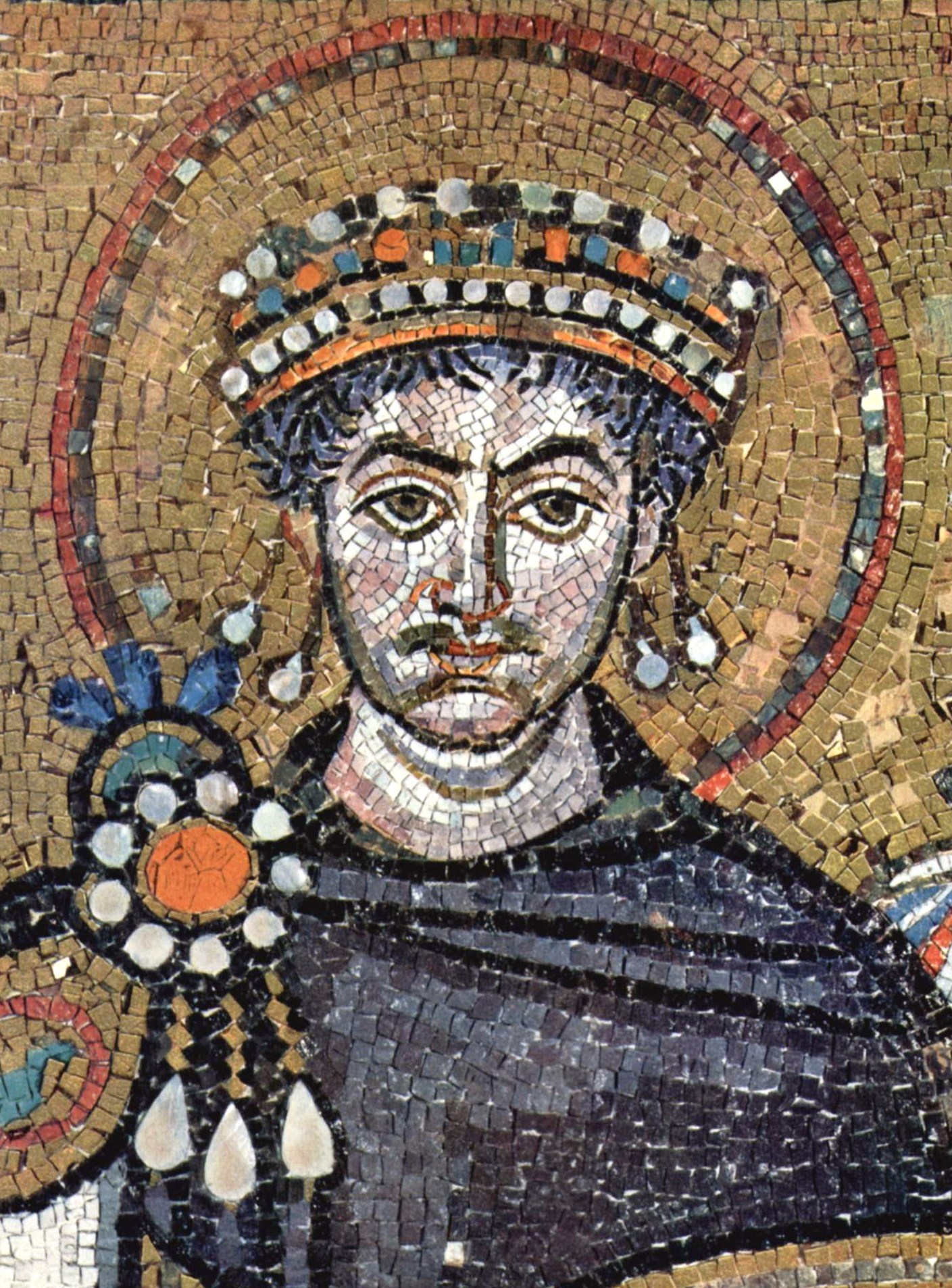
When is a "Roman" not a "Roman" ?

On seeing a portrait of Emperor Septimius Severus with his wife and two sons, I was struck by what could be called the "Byzantineness" of the style.

This caused me to reflect on the nonsense of the classification of "Byzantine", "Byzantines" and "Byzantine" empire.
Since the 19th century western scholars blithely use the name "Byzantine" in the mindset that the people of the Roman empire, ruled from Constantinople, were not Latin, did not speak Latin and so were no longer Roman. Quite overlooking the fact that in titular addresses the word Roman was used to describe their empire and citizens.

Why the Severan portrait made me realise this nonsense was...
1) Septimius was of Punic (Phoenician) origin.
2) He was born in the town of Leptis in Libya.
3) He spent much of his reign ruling the Roman empire away from the city of Rome.
4) His wife was Aramaic from Syria.

So, Septimius must be a "Byzantine" then, he sounds so "un-Roman" and look at how decadent he dressed.
Well, he ruled from 193 - 211 AD, 119 years before the founding of Constantinople by emperor Constantine in 330 AD, and the supposed creation of the "Byzantine" empire as a result of this.

Lets compare with emperor Justinian I, supposed "Byzantine" and ruler of the "Byzantine" empire.
Justinian ruled the Roman empire from Constantinople from 527 - 565 AD.
He referred to himself as Roman, his empire as Roman and his citizens as Romans.
1) Born in Dalmatia of Latin origin.
2) Never ruled from Rome but from Constantinople, even though by 560 AD Rome was again under imperial rule.
3) His wife, Theodora, was Greek.

At the very least it can be argued that Justinian being of Latin origin would be considered more of a Roman than Septimius.

If you rely on the "History Channel" for your historical education, you will be in dire need of educational therapy in the form of researching such things as the "Byzantine" empire for yourself.

In the reign of emperor Heraclius this is also given by scholars as the time the "eastern" empire became "Byzantine" because for purely administrative purposes during a 26 year war against the Persian kingdom he made all state correspondence in Greek. However on coinage Latin was still used.
On the above coin, we read on the obverse side "DN HERACLI-US PP AUG" whilst on the reverse we read "VICTORIA AUGUS". His style is no more decadent than of Septimius.
1) Born in Cappadocia of Armenian origin. During the reign of emperor Maurice family settled in the Exarchate of Africa .
2) First wife, Eudocia, Greek name, possibly also of Armenian origin. Family settled in the Exarchate of Africa. Second wife, Martina, was his niece (!)
3) Though Rome was under imperial rule, Heraclius never went there.
A gold Solidus from the reign of Heraclius, on the obverse he is shown with his son Constantine beside him, circa 620 AD.
A gold Solidus showing emperor Licinius beside his son, Licinius II, circa 320 AD.


These "un-Roman" characteristics seem similar to emperor Septimius.
But wait, by the time of Heraclius, the empire was known as a "Greek" or "Byzantine" empire!
The Muslim Syrian scholar Ismail ibn Kathir, writting around 1350 AD, still referred to the empire as Roman. In a eulogy to Heraclius he wrote: "He ruled the Romans with great leadership and splendor."


In summary, a serious historian needs to read other sources, especially non 19th & 20th century Frankish sources which had their own imperial agenda, to understand when a "Roman is not a Roman".

Tuesday, 24 January 2012

Why mount Masis is not mount Ararat

Doing a course on Armenian history, I took out a fine old Armenian publication «Հայկական Սովետական Հանրագիտարան» (Soviet Armenian Encyclopaedia) 1976 edition.
No interest in any of the Soviet propaganda that may exist in it.
These are famous encyclopaedias in Armenia and the Diaspora, with a wealth of information about Armenian culture and history that until the Internet age, was so hard to find.

There is a double-page map of Arsacid (Arshakuni) Armenia of the 4th century AD.
I was looking at the old province of Gortuk (Gordyene) when my eyes saw in clear Armenian writting «Արարադ Լ.»
That means Mount Ararat.

Looking on Google Map for the present name of this mountain, I learnt it is now called mount Judi.

Apparently, for the early Christian church (and even today in Judaism and Islam) this was the location of the mountain that "Noah's Ark" set upon after the Flood.

The mountain that almost all diasporan Armenians call "mount Ararat" was actually called, according to the map in the encyclopaedia «Ազատ-Մասիս» (Azat - Masis).
Confusingly the map makers have kept the modern provincial name of the area, «ԱՅՐԱՐԱՏ»(Ararat).

Azad-Masis may derive from the Avestan title Yazata-Mazista which equates to "the venerable, the greatest".
This 5,137 meter high extinct volcanic mass was called the "Palace of Aramazd and Astghik"* by the ancient Armenians.
The lower south-eastern slope, which in the Arsacid map is called "Մասիս" (Masis and Diasporan Armenians call this summit, Masis whilst those of the Republic call Sis) was said to be "a place of incessant fire, of Dragons"*.
At the base of this mountain was a sacred spring called "Buth"*.
This probably derives from the Avestan deity of the water, "Burz".

A possible scenario is that the mountain could not be destroyed, like the pagan temples, by the zealous Gregory the Illuminator and his successors in their mission of converting the kingdom to Christianity, and so, the mountain was renamed to something Christian.

But there was already a mountain called Ararat, in the province of Gortuk?
Alas, this province did not remain under Armenian control.
How?
Due to Armenia being brought into an alliance with the Roman Emperor Julian II (who reverted to Paganism) the kingdom was expected to provide military aid for his campaign into Mesopotamia (Iraq) to attack the capital of the Persian kingdom, Ctesiphon.
So?
After initial victories, the Roman army was dicisively defeated at the "Battle of Samara" and Julian was killed.
Okay, what about "the real mount Ararat" and Gortuk?
After the Romans were defeated and left to find a new leader, Jovian, and make large concessions to Persia to survive and escape back to the Roman empire, they made a treaty with the Persian king.
This involved ceding control of most of Armenia to Persia, including the province of Gortuk.

It seems that the real mount Ararat in Gortuk was forgotten, the region that sired the "Urartuan" people.

And that original Ararat was forgotten by western Christianity, but not by the local Armenians, or Judaism or Islam.

So in summary, yes "Noah's Ark landed in Armenia upon mount Ararat", just it was in the Armenian province of Gortuk.

*See "Armenian Mythology" by Mardiros H. Ananikian, from "The Mythology of All Races: Volume VII", (published in New York, 1925)